Mobile device
- 1.A caregiver records a medication, note, task, or visit.
- 2.The change is written immediately to local SQLite.
- 3.A local key encrypts the sync payload before it leaves the device.
Caregiver Dashboard keeps the working record on the device first, encrypts changes before they leave it, and brings approved devices back into sync when connectivity returns.
The original sync-cycle graphic below shows how a care event moves from local capture to encrypted server persistence and back to approved devices.
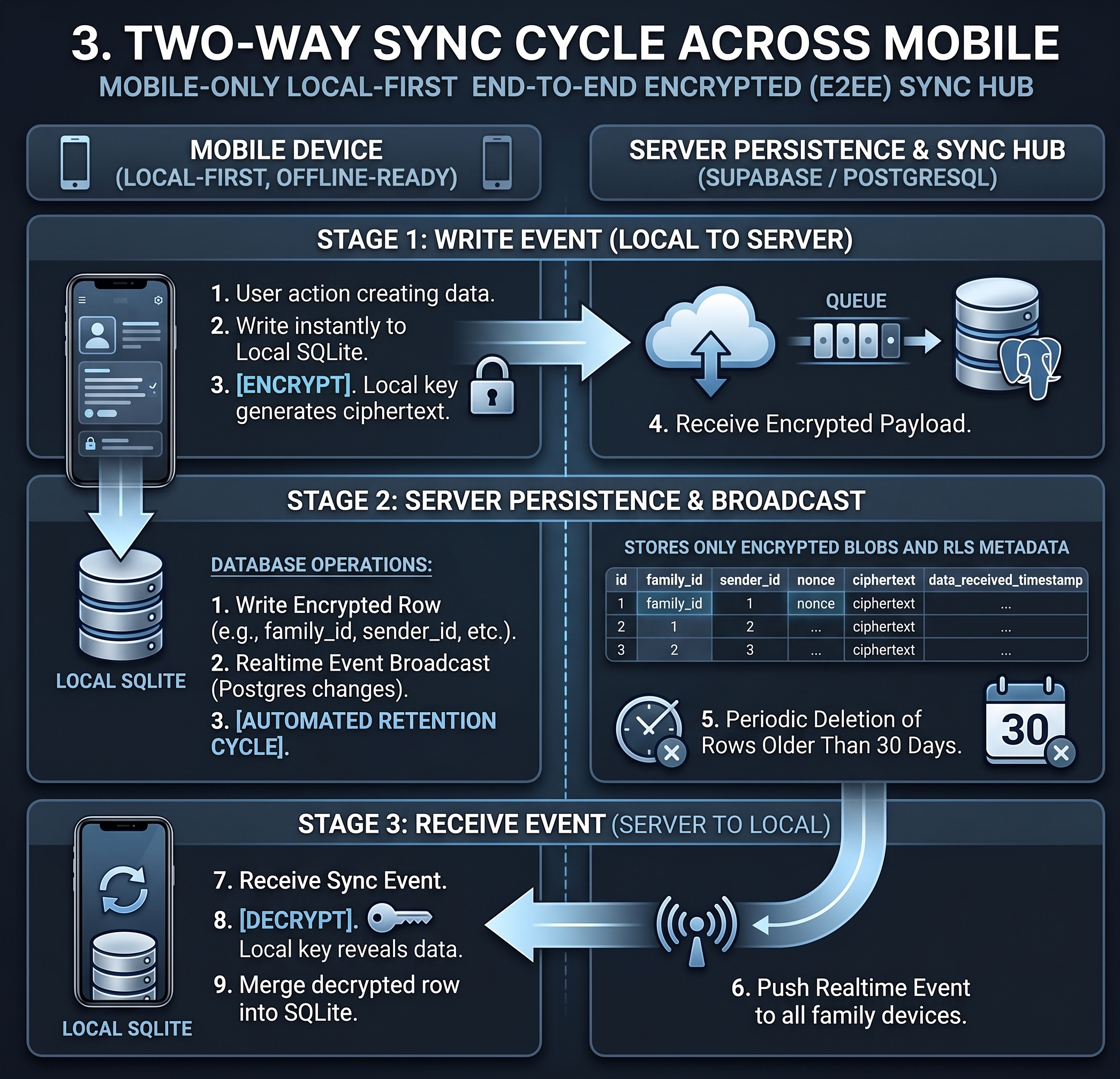
The encrypted payload waits in the sync queue, then reaches server persistence with family scope, actor metadata, and timestamps.
CIPHERTEXT + RLS METADATAA realtime event tells approved family devices that new encrypted data is available. The broadcast carries coordination metadata, not plaintext care notes.
NO PLAINTEXT PHIThe same care record appears across approved devices, with offline writes preserved and conflicts resolved by explicit version and timestamp rules.
CONVERGENT LOCAL UXThe mechanics are intentionally straightforward: the device stays useful without a network, while the sync layer protects scope and keeps every approved device aligned.
Caregivers can capture what happened immediately. The local record is the source of truth for the active workflow.
Sync transports encrypted blobs with the metadata needed for routing, authorization, and convergence.
Family and patient scope stays explicit so the right people see the right record on the right device.
From a family caregiver’s phone to an independent caregiver’s caseload, the workflow keeps documentation close at hand and synchronization deliberate.
Get Started